

Wednesday, November 1, 2017

Monday, January 23, 2017
Thursday, September 22, 2016
Fun Dental Pumpkins
Fall is upon us. I absolutely enjoy early fall weather with the mild temperatures, and the beautiful colors that transform our trees into living works of art. It is also the season of pumpkins!
Here are some really cool pumpkins with a dental spin to them.
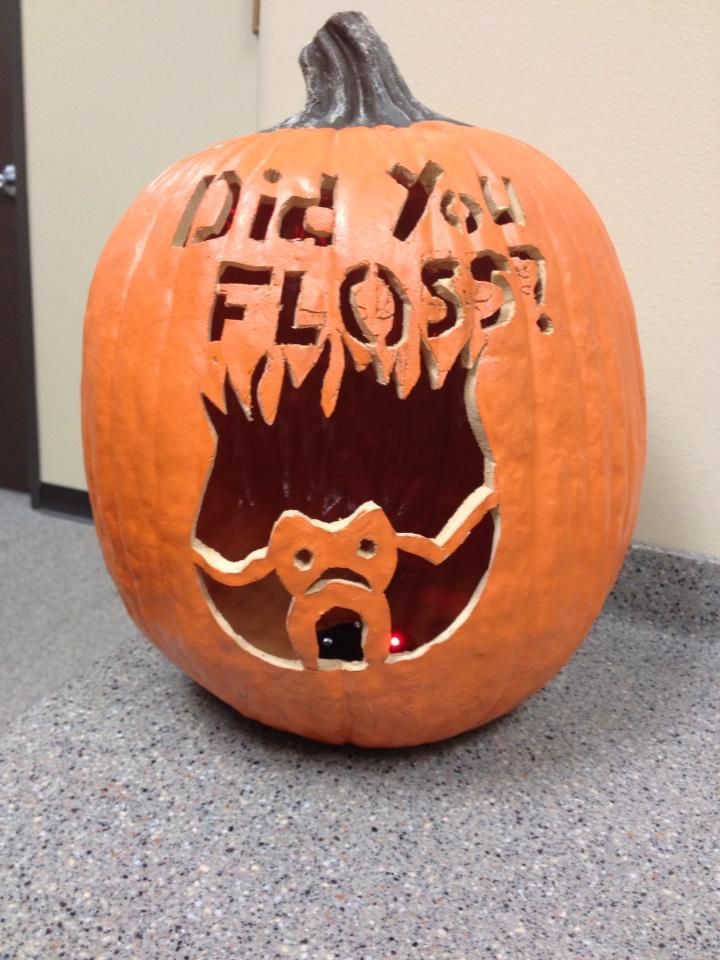
I thought this was a fun way to highlight flossing!

That is one interesting dentition

Happy Jack

Oral Hygiene pumpkin

Great Brace Face!

Happy Smily Brace Face

Happy Autumn months!
Tooth Sensitivity

Sensitive teeth can affect your day to day lifestyle. Just being able to enjoy your favorite desert to simply brushing your teeth can become extremely painful. While sensitive teeth are usually as a result of a cavity, there are many other reasons why teeth can become sensitive.
Usually a sensitive tooth is the body's signal to alert you that something is wrong with the tooth. Sometimes the reasons for a tooth being sensitive is minor and other times it might require a trip to the dentist.
Common things that could cause sensitivity include
- Food impaction: This could be a result of food impaction, or food stuck between teeth, which could cause the gums to get irritated. Simply flossing and getting rid of food debris could improve symptoms
- Gum inflammation: Excessive plaque could lead to red irritated gums, which bleed easily. Improving oral hygiene habits could improve symptoms
- Periodontal disease: Continuous proliferation of plaque bacterial and tarter left on teeth could lead to further breakdown of gum tissue and surrounding bone leading to loose teeth and progressive gum infections. Periodontal disease requires continuing care by a dentist.
Painful teeth
- Recession or root exposure. it is common to have root sensitivy due to lack of enamel on the root surfaces. Enamel serves as a natural insulator
- Discoloured tooth: Could be that tooth has a cavity, or has an infected pulp
- Fractured tooth: This usually is noted by pain on chewing.
- High dental filling or restoration. It is important to have these restorations adjusted to alleviate symptoms
- Worn down teeth, exposing dentin which is more porous than enamel.: This could be due to mechanical means, i.e brushing too hard and grinding of teeth or chemical means which include excessive consumption of acidic food or regurgitation.
It is important to visit the dentist as early as possible to address issues with tooth sensitivity.
Tuesday, June 14, 2016
ANCHOR FAMILY DENTISTRY NEWS LETTER
www.anchorfamilydentistry.com
JUNE 2016

Tips for Choosing the Correct
Toothpaste
When it comes to choosing
toothpaste, it is easy to become overwhelmed by all of your options on the
market. There are dozens of different types on shelves that claim to whiten
your teeth, decrease tooth sensitivity, prevent cavities, protect against tartar,
and/or all of the above. Toothpaste in its entirety doesn’t just polish teeth;
it also removes the bacteria that cause dental plaque and bad breath. It’s
important when shopping for toothpaste to select a brand that is approved by
the American Dental Association. Since there is no generic toothpaste for all
ages and mouths, it helps to acquire some tips so you select the one that will
meet your individual needs.
Types of Toothpaste
- Anti-cavity: This type of toothpaste contains fluoride. Fluoride plays an active role in preventing decay, and it actively strengthens tooth enamel.
- Anti-gingivitis: If you spit blood in the sink, this is an early sign of gingivitis, a mild form of gum disease. Anti-gingivitis toothpaste helps reduce oral bacteria and can be very effective at stopping gingivitis in its tracks.
- Desensitizing: If you’ve ever bit into an ice cream cone and felt a sharp pain in your tooth’s nerve, this type of toothpaste will provide relief by blocking the tooth’s pain signal to the nerve.
- Tartar-control: This toothpaste does exact what it says, however, the best way to remove tartar is by scheduling a professional dental cleaning with one of our doctors.
- Whitening: This toothpaste contains chemicals that are able to help maintain the natural color of your teeth.
The list doesn’t even end there.
There are toothpaste types for children that are non-toxic and great for those
who are new to brushing and may swallow the toothpaste while cleaning their
teeth. Additionally, there are toothpaste types for smokers, maintaining gum
health, fresh breath, and even organic toothpaste.
How Do I Know Which One Is Right
For Me?
Today there is toothpaste to meet
the oral needs of everyone, but while all of the products on the shelf might
seem the same, with a little help from your dentist you can determine which is
right for you. It is important to schedule dental checkups and professional
cleanings twice a year to prevent tooth sensitivity, gum disease, tartar
buildup, and tooth decay.
Thursday, October 29, 2015

Wednesday, July 17, 2013
The Anti-Cavity Diet
The Anti-Cavity Diet
An Article from Discovery Health
There is no perfect diet that will keep your teeth from all harm, but what you eat can have an effect on the health of your teeth and gums. Eating right has benefits on two fronts: By supplying your body with the right nutrients, a healthful diet strengthens your teeth from the inside; and by limiting the foods that promote bacterial growth, it protects your teeth from outside invaders. Building strong teeth
Teeth are essentially a kind of bone. They are harder and more durable because they are on the outside, but the same nutrients that promote a strong skeleton promote strong teeth
.
Calcium.
The primary component of strong bone tissue is the mineral calcium. It gives the skeleton structure and hardness. It may seem that teeth, once they are fully grown, don't need any more calcium. Indeed, the most important time to ensure a proper amount of calcium in the diet is when teeth and bones are forming, but even after they are fully grown, teeth and bones still need to have an adequate supply. The body constantly takes calcium from bones and teeth and replaces it with new supplies. You should make sure that your body has plenty on hand.
Getting enough calcium in the diet can seem difficult for those who don't want to get too much fat. Good sources of calcium without too much fat are nonfat and low-fat milk, low-fat and nonfat yogurt, some dark-green leafy vegetables, and calcium-fortified orange juice.
Vitamin D.
Vitamin D works hand in hand with calcium. It doesn't add to the hardness of bones and teeth in itself, but it promotes the deposition of calcium in the skeleton. Without it, it wouldn't matter how much calcium your body had available, because the calcium would not be absorbed into bone tissue.
Vitamin D is added to almost all commercial milk, and many other foods are now fortified with it. Your body has the ability to make its own vitamin D also. The vitamin is produced in the skin when your skin is exposed to the sun's ultraviolet radiation. It takes just 15 minutes a day of direct sun exposure on the skin to get the vitamin D your body needs.
Vitamin C.
Almost every ailment has been said to be "cured" by vitamin C, but here there is a real connection -- connective tissue. Vitamin C is vital to the health of connective tissue such as your gums. In fact, one of the first symptoms of vitamin C deficiency, or scurvy, is weak, sore gums that bleed easily. Vitamin C can be found in citrus fruits and some vegetables such as broccoli and brussels sprouts.
Fluoride.
The one nutrient that affects the health of your teeth the most is also one of the most controversial. The mineral fluoride has been proved to make teeth harder and more resistant to decay. Study after study has shown that people living in areas where fluoride is added to the water have fewer cavities than those who do not. Although many of us do get our fluoride from fluoridated drinking water, some don't have that option in their communities. Ask your doctor or dentist if you are concerned.
Problem Foods
Because plaque formation is the start of virtually all types of dental disease, and plaque bacteria feed on leftover sugars, it stands to reason that cutting down on sugar -- in all of its forms -- will help prevent cavities. Easier said than done.
Sugar is one of the most insidious ingredients in the modern diet. If you look at almost any prepared food's ingredients, somewhere in that list will be sucrose or one of its close relatives (such as glucose, maltose, lactose, fructose, galactose, dextrose, corn syrup, molasses, brown sugar, raw sugar, and so on). Even honey, no matter how unrefined, contains simple sugars that serve as a banquet meal for plaque bacteria. The same goes for fructose (naturally occurring fruit sugar).
Complex carbohydrates can also provide food for bacteria in your mouth. In fact, some researchers suggest that starchy foods may be even more detrimental to your teeth than simple sugars. Starches are more sticky than sugar; the saliva that usually dissolves and washes away small amounts of sugar on the teeth might not be able to contend with the clumps of potato chips or crackers stuck in and around molars. Starchy foods that stick to your teeth and stay there for hours provide plenty of fuel for enamel-eroding microbes.
This doesn't mean that you should avoid starchy foods. On the contrary, they are part of a healthful diet. It only means that you must be more conscious of how these foods affect your teeth and more conscientious about cleaning them after you do enjoy those snack chips. Although no other nutritional component besides sugar has been positively linked to tooth decay, the rest of your diet cannot be overlooked in your effort to maintain healthy teeth and gums. A diet that is full of sugars and overprocessed foods (or one devoid of vitamins, minerals, and crunchy fruits and vegetables) can eventually lead to decay, even in the mouths of the most avid brushers and flossers.
Don't let anxiety keep you from visiting the dentist -- professional care will help you keep your teeth clean and healthy.
Thursday, June 27, 2013
Tooth Enamel: What Helps, What Hurts
Tooth Enamel: What Helps, What Hurts
WebMD Feature
By Peter Jaret
Reviewed By Steve Drescher, DDS
The outer surface of teeth, called enamel, is designed to last a lifetime. "Enamel is the hardest substance in the body," says dentist Leslie Seldin, DDS, a spokesperson for the American Dental Association. Some wear and tear of tooth enamel is inevitable. But Seldin says there's plenty you can do to keep your enamel strong. Start with these eight steps.
1. Limit Sugary Soft Drinks and Foods
Sugar leads to the production of acids in the mouth, which soften and eventually wear away at enamel. Chewy candies that stick on your teeth are particularly damaging. So are soft drinks. Along with sugar, soft drinks may contain citric acid and phosphoric acid, making them even more acidic. Artificially sweetened soft drinks are a smarter choice than sugary soft drinks. But sugarless sweeteners are acidic and may erode enamel over time. The best choice when you're thirsty: a glass of water.
2. Help Yourself to Foods That Protect Enamel
Calcium in foods neutralizes acids in your mouth. Calcium is also an essential mineral needed to keep bones strong. Milk, cheese, and other dairy products all help protect and strengthen enamel, says Pamela L. Quinones, RDH, president of the American Dental Hygienists’ Association. Choose low-fat or fat-free dairy to help keep fat and calories to a minimum. If you frequently drink orange juice, O.J. with added calcium may be the best choice. Calcium buffers the normal acidity of orange and other citrus juices.
3. Avoid Over-brushing
Brushing too vigorously can wear down enamel. "Always use a soft brush and brush gently," says Seldin. Hold the brush at about a 45-degree angle to your gums and move it back and forth in short strokes, about the distance of one tooth. Don't brush immediately after eating sweets or citrus fruits. Acidic foods temporarily soften enamel and may make it more susceptible to damage from brushing. Wait for up to an hour after you eat, giving your enamel time to re-harden. Then brush your teeth.
4. Treat Heartburn and Eating Disorders
With severe heartburn, stomach acids may escape up into the esophagus. If those acids reach your mouth, they can erode enamel. The eating disorder bulimia, in which people vomit food after they eat, is another threat to enamel. If you have symptoms of heartburn or bulimia, talk to your doctor about treatment.
5. Beware of Chlorinated Pools
When swimming pools aren't chlorinated properly, the water may become too acidic. Tooth enamel exposed to pool water can begin to erode. In a study by the Centers for Disease Control, 15% of frequent swimmers showed signs of enamel erosion, compared to only 3% of people who don't swim. Check with the recreation center or gym where you swim to make sure the pool's pH is checked regularly. While swimming, keep your mouth closed to avoid exposing your teeth to chlorinated water.
Saturday, June 22, 2013
Summer ice pop Recipe
First day of Summer is June 21st. We are officially in Summer!
Cool off this summer with this fun healthy recipe and avoid processed sugars
An Article from whole life nutrition kitchen
Watermelon Whole Fruit Popsicles
You can replace the watermelon puree with honeydew melon or cantaloupe puree. Use any fresh organic fruit you have on hand. I like using contrasting colors because it makes the popsicles look so pretty! And don't forget to use seedless watermelon.
3 cups watermelon puree (about 1/4 to 1/2 a watermelon)
1/2 cup chopped fresh strawberries
1 kiwi, peeled and sliced
1 peach or nectarine, diced small
handful fresh cherries, pitted and chopped
Cut the watermelon into chunks and then puree it in a blender until smooth. Set aside.
Set out about 1 dozen popsicle molds (amount needed will vary depending on size of molds). Fill each one with the chopped fresh fruit. Then pour in the watermelon puree until each mold is full to the top. Place a popsicle stick into each one. Place into your freezer and freeze for about 6 to 8 hours.
When ready to serve, run the popsicle molds under warm water for a few seconds and then pull each one out. Enjoy! Source: www.NourishingMeals.com
Wednesday, May 29, 2013
Break the Sugar Addiction
Breaking Your Sugar Addiction
The 4-Week Plan to Stop Sugar Cravings
We're not talking
about some dangerous or illegal drug here; we're talking about sugar. Although
it's considered harmless in comparison, sugar, in excess, can cause a host of
problems for a lot of us: cravings, binge eating, weight gain and heart disease
among them. According to the USDA, the average American consumed 151 pounds of
sugar in 1999—an all time high. Since then, consumption has dropped slightly
and in 2010 the average American consumed 132 pounds. (To put that into perspective,
consider that the number was just 4 pounds in the year 1700.) At least half of
the sugar we consume comes from soft drinks, fruit drinks, and sports drinks.
The rest sneaks into our diets in the form of ketchup, teriyaki sauce,
chocolate milk and the obvious sweets like cookies, cakes, ice cream and even
breakfast cereal. Surprisingly, some "healthy foods" such as yogurt
and instant flavored oatmeal can pack in 20-30 grams (5-7 teaspoons) of
unnecessary added sugar! It seems like we're drowning in sugar, and nobody is
wearing a life vest.
The American Heart
Association (AHA) recommends that we limit our daily sugar consumption to 7% or
less of our daily calorie intake—that's about 6 teaspoons (100 calories) for
women and 9 teaspoons (150 calories) for men. But that adds up fast. Just one
12-ounce can of regular soda contains 8-10 teaspoons of sugar and 130-150
calories. One glazed donut contains 6 teaspoons, and a half cup ice cream (the
standard serving size, although most portions are much, much larger) contains 4
grams of added sugar!
Why Should You Care? Is Sugar Actually Bad for You?
Well, aside from the
increased bulge around the waistline, diets high in sugar are strongly linked
to an increased risk for type 2 diabetes, elevated triglycerides, low HDL
(good) cholesterol levels, and heart disease. Sugar intake has also been linked
to depression, migraines, poor eyesight, autoimmune diseases (such as
arthritis, and multiple sclerosis), gout and osteoporosis.
Although sweet foods
are tempting and delicious to most people (blame Mother Nature for that!), the
more sugar you eat, the higher your tolerance becomes. So if you have a strong
sweet tooth or intense cravings for sugar, chances are not that you were born
that way, but that your dietary habits and food choices created the sugar
monster you may have become.
Cutting Out Sugar: A 4-Week Action Plan
While the occasional
sweet treat won't make or break your weight loss or your health, many people
have trouble stopping after a sensible portion or saying no to sugar when it's
available. If you feel out of control around sugar, then a sugar
"detox" is a great way to reduce your cravings, eat better, and bring
sugar back to where it belongs: as an occasional treat that you consciously
choose to eat in a mindful manner, not a daily treat occurrence that controls
you.
The first step in
conquering your sugar habit is to rid your pantry and refrigerator of added
sugar. Some things (think ice cream, cookies and candy) are obvious, but most
of us need to look closer at where the sugar in our diets is coming from. This
will require a bit of label reading in the beginning, but after a while, it
will become easier.
In one week, you've
probably found lots of sugar in your diet. Some of it may have been obvious,
like those frozen waffles or lattes from the local coffee joint. But others
might not have been so clear, as sugar tends to lurk in many "diet"
foods and lower-fat foods, added by manufacturers to make their low-cal
offerings taste better.
Now that you know
what to look for (and avoid), it's time to replace the products you tossed with
sugar-free counterparts. For example, replace high-sugar cereals with a whole
grain cereal that contains little to no added sugars. Sweeten it naturally with
fresh berries or half of a diced banana. Instead of snacking on candy or
cookies, reach for a handful of nuts or some raw veggies and hummus. Replace
sweetened yogurt with Greek yogurt or plain yogurt. Look back at week one and
the foods you used to eat that contained sugar. Can you find no-sugar oatmeal?
A healthier snack than a sugar-sweetened smoothie (how about a whole piece of
fruit)? A more filling afternoon treat than that sugary "protein bar"
(such as peanut butter on whole-grain crackers)?
When choosing a
refreshing beverage to quench your thirst, keep in mind that you want to eat
your calories, not drink them. Choose ice cold water flavored with a squeeze of
fresh lemon or an orange slice. Or flavor unsweetened iced tea with fresh mint,
crushed raspberries, or a squeeze of citrus.
One tip to help you
avoid added sugar at the supermarket is to shop the perimeter of the grocery
store as much as possible. Think about the general layout of a grocery store:
The outside is home to fresh fruits and vegetables, lean meats, dairy products,
and whole grain breads and the inside aisles are stocked with cookies, chips,
soda, fruit juice, cake mixes, and other processed foods. Spend most of your
time on the outside and only go down the inner aisles for specific products,
like whole-grain pasta.
Never shop on an
empty stomach and always shop with a list. Shopping while hungry can lead you
to adding all kinds of snacks and impulse buys to your cart. Meal planning can
be a tricky task at first, but following a meal plan is an important part of
breaking the sugar addiction. It will help to keep you on track and help
prevent stopping for fast food when you don't have a game plan for dinner.
Spend a little time on Sunday afternoons jotting down some meal ideas for
throughout the week. Make a list of the food items you will need to make the
meals you wrote down and stick to it!
Week 3: Stop the Cravings
Now you really start
to put your plan into action. You’ve identified the sources of added sugar in
your diet and replaced those foods with healthier and more wholesome
alternatives. Your kitchen is now set up for success!
The first week of
saying no to sugar will be the hardest, but the more diligently you stick to
your plan, the better you'll fare in the end. Even a tiny taste of sugar during
this time period can lead to setbacks.
Now that you have yanked
that sweet tooth, it's time to devise a plan to prevent a sugar relapse.
Although sugar isn't necessary for health and it's perfectly fine if you want
to continue avoiding it, it probably isn't realistic for most people to avoid
all forms of sugar forever.
And remember: It
generally takes about 3-4 weeks for a new behavior to become habit, the most
important thing is to stick with it.
Thursday, April 25, 2013
Earth Day
Earth Day
Earth Day is an annual day when events are held worldwide to show support for environmental protection. Earth Day is observed on April 22 each year
- Here are some ideas related to dental care on how to conserve:1. Turn off the water while brushing your teeth to help save approximately 25 gallons of water a month.2. Recycle your plastic mouthwash bottles.
3. Find ways to recycle an old tooth brush
4. Try a toothbrush made from recycled or renewable materials and recycle it when it’s time for a new one.
5. Use natural toothpaste such as Tom's of Maine
Friday, April 19, 2013
8 Tooth Brush Ideas
8 Toothbrushes Ideas
The ADA recommends changing your toothbrush every 3 months. Here are some nifty ideas to reuse all those toothbrushes.
After disinfecting the tooth brush with soap and water you can
- Use it to clean crevices and hard to reach areas such as a keyboard and windows.
- For a really good clean, use a toothbrush to clean around faucets and grout between tiles.
- It is useful for scrubbing old shoes, just use a little soap and warter.
- With some extra help from tooth paste, you can shine up jewelry such as silver and gold.
- You can spot clean dirty laundry and upholstry.
- You can use it to clean your fingernails
- If you have messy toddlers you can use a tooth brush and tooth paste to get crayon marks off the wall!
- Use a toothbrush as a make up tool to control unruly eyebrows.
Just remember to use a different toothbrush for each idea!
Wednesday, April 10, 2013
How to Get Soft Lips
How to Get Soft Lips
Step 1: Lock in Moisture
"The skin on your lips is thin and contains less natural pigment, so it's more susceptible to sun damage and dryness," says Rein Welch, M.D., a dermatoligist and Denver Dermatology Consulatants. Keep that smacker supple by locking in mosture as soon as you step out of the shower. Take a warm, moist washcloth and press it against your mouth for a full minute to saturate lops before the next step, exfoliation.
Step 2: Gently Exfoliate
Once a week, squeeze a pea-sized amount of lip balm (Like Blistex Lip Ointment, $2, at drugstores) into your hand and combine it with equal amounts of granulated sugar, With a clean finger, scrub the mix onto your lips, using a circular motion, for one minute. "The sugar is therapeutic and removes the cracking," says Charles Zugerman M.D., associate professor of dermatology at Northwestern University's Feinberg School of Medicine. For a Premade fix, try Green by Nature Lip Scrub in Mint Green Tea ($4, greenbynaturebeauty.com).
Step 3: Boost Moisture
To amp up hydration and lock in moisture at night, apply a lip salve containing shea butter or petroleum jelly, Such as EOS Lip Balm SmoothSphere ($3, evolutionofsmooth.com) or Urban Rituelle Lip Balm ($8, b-glowing.com) "these heavy emollients createa watertight seal on the lips' surface, protection against moisture loss," Welch says.
Step 4: Apply Protection
The sun can fry your lips, especially if you wear light-attracting glosses. Experts suggest swiping on a balm with an SPF of 15 or higher every day. One to try: Softlips Lip Protectant/Sunscreen SPF 20 ($4 for two, drugstore.com). "Wearing adequate sun protection gaurds against cancer causing UVB rays," Zugerman says. It also slows collagen loss and the development of vertical wrinkles and prevents scaliness.
Step 5: Smooth on Color
Since you're already wearing a barrier lip balm, you can use any lipstick you like. If your lipstick has a sunscreen (try Neutrogena Cosmetices MoistureShine Lipstick SPF 20, $10, drugstore.com), Zugerman says, you can skip Step 4 if you want. To make your color last, follow up by pressing a tissure over your lips and patting on translucent powder. A tiny amount of powder will filter through the tissure, sealing in the color.
Article From Womens Health Magazine
Thursday, April 4, 2013
April is Autism Awareness Month

Help Spread Autism Awareness by Supporting these Charities during Autism awareness month
Autism Speaks
Cure Autism Now
Autism Society of America
Wednesday, March 20, 2013
Oral Health: The Mouth-Body Connection
Oral Health: The Mouth-Body Connection
It's easy to ignore the effects of poor oral hygiene because they're hidden in your mouth. But gum disease may point to problems with diabetes and heart disease and loose teeth could be a sign of osteoporosis. Could it be that a healthy mouth means more than just a sparkling smile? And what could your dentist learn about you the next time you open wide?
Your Mouth, the Gateway to Your Body
To understand how the mouth can affect the body, it helps to understand what can go wrong in the first place. Bacteria builds up on teeth make gums prone to infection. The immune system moves in to attack the infection and the gums become inflamed. The inflammation continues unless the infection is brought under control.
Over time, inflammation and the chemicals it releases eat away at the gums and bone structure that hold teeth in place. The result is severe gum disease, known as periodontitis. Inflammation can also cause problems in the rest of the body.
Oral Health and Diabetes
The working relationship between diabetes and periodontitis may be the strongest of all the connections between the mouth and body. Inflammation that starts in the mouth seems to weaken the body’s ability to control blood sugar. People with diabetes have trouble processing sugar because of a lack of insulin, the hormone that converts sugar into energy.
"Periodontal disease further complicates diabetes because the inflammation impairs the body’s ability to utilize insulin," says Pamela McClain, DDS, president of the American Academy of Periodontology. To further complicate matters, diabetes and periodontitis have a two-way relationship. High blood sugar provides ideal conditions for infection to grow, including gum infections. Fortunately you can use the gum disease-diabetes relationship to your favor: managing one can help bring the other under control.
Oral Health and Heart Disease
Though the reasons are not fully understood, it’s clear that gum disease and heart disease often go hand in hand. Up to 91% of patients with heart disease have periodontitis, compared to 66% of people with no heart disease. The two conditions have several risk factors in common, such as smoking, unhealthy diet, and excess weight. And some suspect that periodontitis has a direct role in raising the risk for heart disease as well.
"The theory is that inflammation in the mouth causes inflammation in the blood vessels," says Cram. This can increase the risk for heart attack in a number of ways. Inflamed blood vessels allow less blood to travel between the heart and the rest of the body, raising blood pressure. "There’s also a greater risk that fatty plaque will break off the wall of a blood vessel and travel to the heart or the brain, causing a heart attack or stroke," Cram explains.
Oral Health and Pregnancy
Babies born too early or at a low birth weight often have significant health problems, including lung conditions, heart conditions, and learning disorders. While many factors can contribute to premature or low birth weight deliveries, researchers are looking at the possible role of gum disease. Infection and inflammation in general seem to interfere with a fetus’ development in the womb.
Though men have periodontitis more often than women do, hormonal changes during pregnancy can increase a woman’s risk. For the best chance of a healthy pregnancy, McClain recommends a comprehensive periodontal exam "if you’re pregnant or before you become pregnant to identify whether or not you’re at risk."
Oral Health and Osteoporosis
Osteoporosis and periodontitis have an important thing in common, bone loss. The link between the two, however, is controversial. Cram points out that osteoporosis affects the long bones in the arms and legs, whereas gum disease attacks the jawbone. Others point to the fact that osteoporosis mainly affects women, whereas periodontitis is more common among men.
Though a link has not been well established, some studies have found that women with osteoporosis have gum disease more often than those who do not. Researchers are testing the theory that inflammation triggered by periodontitis could weaken bone in other parts of the body.
Oral Health and Smoking
Not smoking is one of the most important things you can do for your mouth and your body. According to the CDC, a smoker’s risk of severe gum disease is three times higher than someone who does not smoke.
"Nicotine in cigarettes causes blood vessels to constrict," McClain tells WebMD. This interferes with your gums’ ability to fight infection. Not only has smoking interfered with treatment -- gum surgeries tend to be more complicated and recovery more difficult.
Oral Health and Other Conditions
The impact of oral health on the body is a relatively new area of study. Some other mouth-body connections under current investigation include:
· Rheumatoid Arthritis. Treating periodontal disease has been shown to reduce pain caused by rheumatoid arthritis.
· Lung Conditions. Periodontal disease may make pneumonia and chronic obstructive pulmonary disease worse, possibly by increasing the amount of bacteria in the lungs.
· Obesity. Two studies have linked obesity to gum disease. It appears that periodontitis progresses more quickly in the presence of higher body fat.
The Bottom Line on Oral Health
One thing is clear: the body and mouth are not separate. "Your body can affect your mouth and likewise, your mouth can affect your body," says McClain. "Taking good care of your teeth and gums can really help you live well longer." This means brushing twice a day, flossing once a day, and going for regular dental cleanings and check-ups.
Cram stresses the importance of letting your dentist know your full family medical history. And, she adds, "if you have periodontal disease, make sure you see your dentist frequently and get it treated promptly, before it progresses to the point where you begin losing teeth or it starts to affect your overall health."
Source: WebMD
Subscribe to:
Posts (Atom)